


The Ultimate Swimming Pool Safety Guide for Families
You’re only cool in the pool when you’re safe. And if you’re a parent, you know that fun and peace of mind have to go hand in hand, especially around water.
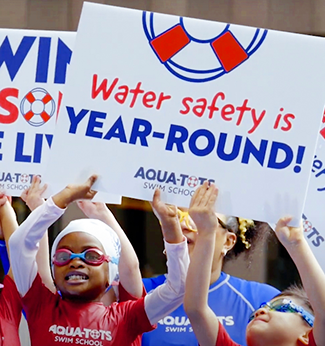
At Aqua-Tots Swim School, we’re all about keeping families safe and teaching year-round swim lessons so children of all ages and abilities grow into safe, confident swimmers for life. While our cozy, 90° pools are designed with safety in mind and led by trained instructors, our goal is to equip families everywhere with practical, effective pool safety tips for kids.
Here’s something that stops a lot of parents in their tracks: according to the CDC, most drownings in children ages one to four happen in swimming pools. It’s not always the big, obvious moments we worry about. It’s the quick ones. The quiet ones.
Whether you are in your backyard, at a friend’s house, or on vacation, this guide is here to support you with practical, easy-to-follow pool safety tips that make a real difference.
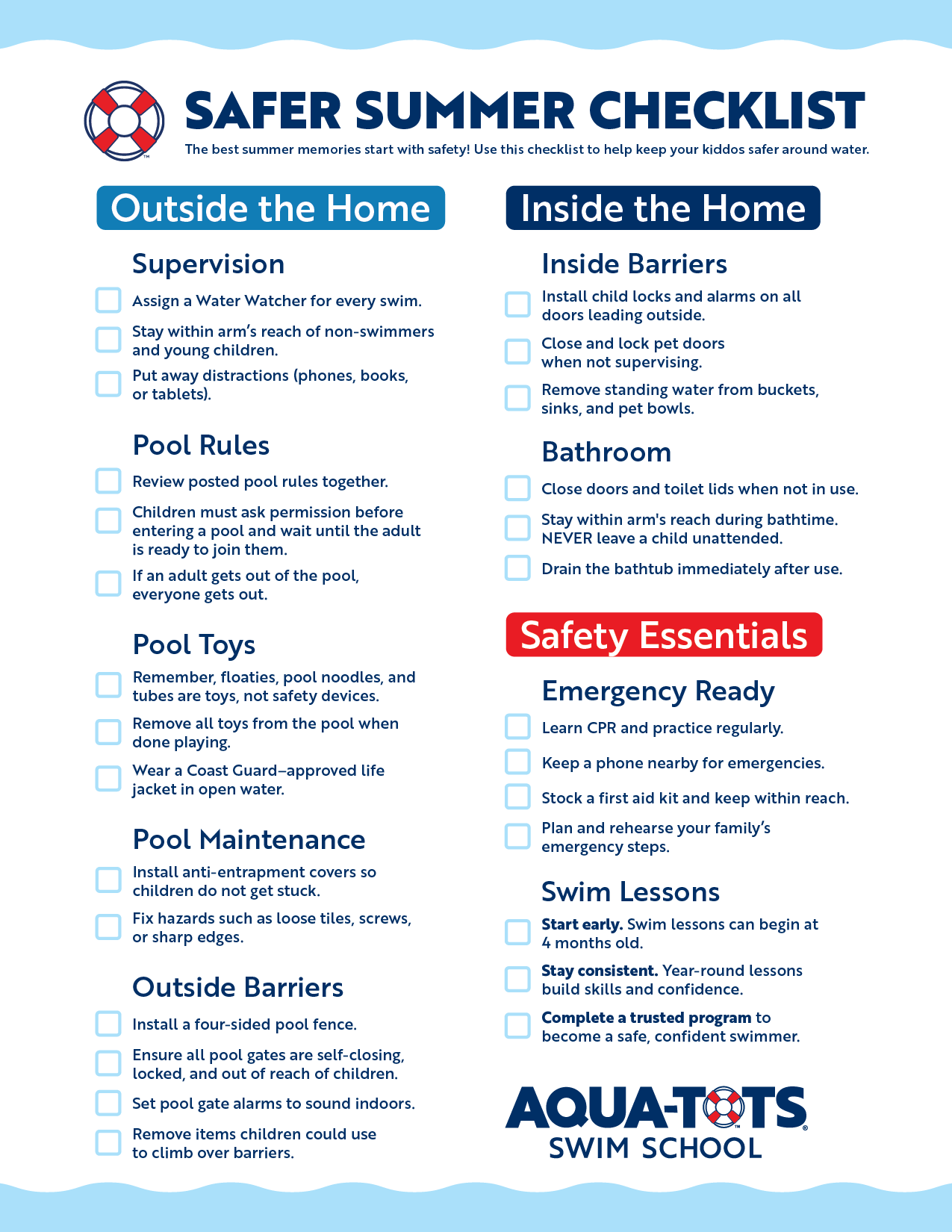
DOWNLOAD THE SAFER SUMMER CHECKLIST.
Our Top 10 Water Safety Tip for a Safer Summer
With 35 years of experience in swim instruction, we know that safer summers start with simple, consistent habits. Follow these essential, step-by-step pool safety tips to help protect your family around water.
1. Constant Supervision: Your Most Important Pool Safety Rule
If there is one thing every parent should hold onto, it is this. Nothing replaces active supervision.
We know you are juggling a lot. Towels, snacks, sunscreen, and conversations. But when kids are in or near the water, supervision needs to be intentional.
The statistics are tough, but important:
- The National Drowning Prevention Alliance reports that 23% of child drownings happen during a family gathering near a pool.
- One out of three parents have left their child unsupervised at a pool for two or more minutes, according to Safe Kids Worldwide.
- Nearly half of child drownings happen within 25 yards of an adult, reports CBS News.
This is why we encourage assigning a Water Watcher every single time. One adult whose only job is to watch the water without distractions.
For little ones and non-swimmers, stay within arm’s reach. Not across the pool. Not for just a moment. But close enough to act immediately.
And one more important reminder. If you are the Water Watcher, avoid alcohol. Clear focus and quick reaction time matter.

2. Set the Tone: Establish Clear Pool Rules Before Every Swim
Kids do best when expectations are clear and consistent.
Before anyone gets in the water, take a moment to review the rules together:
- Always ask before entering the pool
- Wait until an adult is present and ready
- If the adult steps away, everyone exits the pool
It may feel repetitive, but repetition helps these habits stick.
Safe behavior matters just as much. Keep rough play to a minimum. No pushing or surprise jumps. These moments can quickly turn unsafe, especially for less confident swimmers.
Even strong swimmers benefit from structure. The Red Cross reports that 54% of Americans cannot swim well enough to save themselves. Swimming with a buddy adds an extra layer of safety.
3. Pool Toys and Floaties: Know the Difference Between Fun and Safety
A very important layer to pool safety is physical barriers. Pool gates and fences are the physical protection that will keep curious kiddos safely out of the water. Here are a few facts to unlock the We urge all caregivers to avoid floaties, especially as a lifesaving device in the pool. These arm toys can easily and silently be removed by children and provide a false sense of security for children and adults alike.
Similarly, do not rely on pool noodles, inflatables, rafts, etc. to prevent drowning. Instead, invest in Coast Guard approved life preservers.
When swim time is over, make it a habit to clear the pool of toys. To a child, a floating toy can feel like an invitation to come back. Removing them helps reduce the risk of unsupervised access.

4. Maintain a Safe Pool Environment and Equipment
A safe pool requires regular attention.
Take time to look at your pool from a child’s perspective. Check for loose tiles, sharp edges, or anything that could cause injury or snag clothing.
Drains are another key area. Strong suction can trap hair or body parts. Installing anti-entrapment drain covers and maintaining proper systems adds an important layer of protection.
Keeping your water clean and balanced is also essential. Clear water allows you to see what is happening below the surface and respond quickly if needed.
5. Install a 4-Sided Pool Fence with Self-Latching Gates
Barriers are one of the most effective ways to prevent accidents.
Many incidents happen when a child was not expected to be in the water at all. Studies show children who drown were often out of sight for less than five minutes and were last seen inside the home.
A four-sided fence that fully separates the pool from the house is key.
Look for:
- A height of at least four feet
- Self-closing and self-latching gates
- Latches placed out of a child’s reach
Also take a moment to scan the surrounding area. Chairs, tables, and toys can quickly become climbing tools for curious kids.
6. Add Pool Alarms and Outdoor Safety Layers
Alarms provide an added level of awareness.
Pool gate alarms that sound inside your home can alert you if someone heads toward the water unexpectedly. That extra notice can give you valuable time to respond.
Using multiple layers such as fences, locks, and alarms creates stronger protection than relying on just one.

7. Secure Your Home with Inside Water Safety Barriers
Pool safety begins inside the home.
Install locks or alarms on doors that lead outside. This is especially important for younger children who are naturally curious.
Secure pet doors as well. They are easy to overlook but can allow small children to slip through.
It is also important to remove standing water where possible. Buckets, sinks, and even pet bowls can pose a risk if left unattended.

8. Practice Bathroom and Bathtime Water Safety
Water safety habits start early and extend beyond the pool.
Always stay within arm’s reach during bathtime. Even a small amount of water can be dangerous if a child is left alone.
Make it routine to drain the tub immediately after use. Keep toilet lids closed and bathroom doors shut when not in use. These simple actions help reinforce safe habits every day.
9. Be Emergency-Ready: CPR, First Aid, and a Plan
Preparation can make all the difference in an emergency.
Learning CPR is one of the most important steps you can take. Starting CPR immediately after a child is rescued can significantly improve outcomes.
Keep a phone nearby for emergencies, but avoid distractions while supervising. As children grow, teach them how to call 911.
Have a stocked and updated first aid kit within reach of the pool. It is also helpful to talk through a simple emergency plan with your family so everyone knows what to do.
10. Build Lifelong Water Safety Skills with Swim Lessons
Swim lessons are one of the most meaningful ways to help protect your child in and around water.
In fact, research shows that participation in formal swim lessons can reduce the risk of drowning by 88% among children ages 1 to 4. That kind of impact is why so many families choose to start early and stay consistent.
Children can begin lessons as young as four months old, building foundational skills like breath control, floating, rolling over, and safely reaching the pool’s edge. These are the skills that come before strokes, and they are the ones that can truly make a difference.
As your child grows, consistency becomes key. Continuing through a full swim program helps strengthen those early skills, build confidence, and create strong, safe habits in the water over time.
Looking to enroll in swim lessons? For more than 35 years, Aqua-Tots Swim School has been trusted by parents and loved by kids, serving families in over 180 communities around the world. Our programs are designed to meet children where they are and guide them toward becoming safe, confident swimmers for life.
When you pair swim lessons with the safety habits in this guide, you are giving your child the tools they need for a lifetime of safer, more confident experiences in and around water.